A
WebQuest for 5th Grade Science
Designed
by
Cindy Honma
honm5861@pacificu.edu
Introduction | Learners |Standards | Process | Resources | Evaluation | Student Page
Introduction
This lesson was developed as an integral part of a larger unit on Rainforests. It provides students with the opportunity to do Web research, prepare some kind of handout and presentation, jigsaw their knowledge with each other, and create, perform and film a skit. Typically, rainforest teaching has been largely focused around lectures and books. This WebQuest provides students with the chance to work collaborately and incorporate technology in a practical way --- not unlike they will be expected to do later in school and work. Learning becomes more meaningful and active.Learners
This
lesson is designed for 5th grade
science, specifically units around habitats. This lesson is designed to be an extension of basic Rainforest habitat
knowledge. I recommend that teachers have already taught the students
about where the Rainforests are located, their physical characteristics,
and the differences between the 4 layers (forest floor, understory, canopy
and emergent). This lesson is designed to teach students more details
about the animals who exist in the Rainforest habitat. They will share their
knowledge with the rest of the class. It also serves to teach students to
work collaborately, and creatively to teach others. Technically, students
should be familiar with using the Internet for research, how to use iMovie
to edit and format short movies. Knowledge of PowerPoint or other
presentation software will greatly enhance their experience but is
optional.
Objectives and Curriculum Standards
Objectives
1. Students will be able to demonstrate the ability to locate and
analyze information by exploring the web sites and books provided and
recording relevant information on their questionnaires.
2. Students will be able to demonstrate an understanding of
the Rainforest habitat, its inhabitants and how they have adapted to the
environment by completing a questionnaire about their creature and others
on their team, creating and delivering an informative presentation, and
accurately embodying the characteristics of their creature into the
final team movie.
3. Students will be able to demonstrate the ability to work
cooperatively in a group by working together with peers to create a script
and movie about the animals in their team.
4. Students will be able to
demonstrate their abilities using technology by creating an iMovie with
their team.
Science Content Standards Addressed:
1. Describe the relationship between characteristics of specific habitats
and the organisms that live there.
2. Describe how adaptations help a species survive.
Language Arts Content Standards Addressed:
1. Listen to, read and understand a wide variety of informational and
narrative text, including classic and contemporary literature, poetry,
magazines, newspapers, reference materials and online information.
2. Understand and draw upon a variety of comprehension strategies as
needed --- re-reading, self-correcting, summarizing, class and group
discussions, generating and responding to essential questions, making
predictions, and comparing information from several sources.
3. Follow multiple-step directions (e.g. for completing an experiment or
an activity or for using a product.)
4. Investigate topics of interest and importance across the subject areas,
selecting appropriate media sources, using effective research processes,
and demonstrating ethical use of resources and materials.
Technology Foundation Standards for Students:
1. Students use technology tools to enhance learning, increase
productivity, and promote creativity.
2. Students use productivity tools to collaborate in constructing
technology-enhanced models, prepare publications, and produce other
creative works.
3. Students use a variety of media and formats to communicate information
and ideas effectively to multiple audiences.
4. Students use technology to locate, evaluate, and collect information
from a variety of sources.
*Standards taken
from the state of Oregon 2004 social studies content standards
Process and Organization
1. First, you must divide your class into 4 or more teams.
Depending on how many teams you end up with, you might want to assign each one a different tropical rainforest such as Southeast
Asia, South America, Africa, and Australia. Due to the amount of research
and cooperation required, I suggest you keep teams to 6 students or less.
2. Each team must end up with at least one of each type of animal:
mammals, bugs/insects, birds, reptiles/amphibians. Decide which
animals are attached to each team, and create a slip of paper listing one
of those animals. You may also just list the animal without the team if
you want to assign the teams randomly.
3. In class, each student will draw an animal slip out of a basket. This
will be his/her animal to research. The slip may also indicate with
whom they will be teamed. If you prefer to assign the teams, you can match
up the students now. (Day 1)
4. Have prepared a questionnaire asking details you'd like students to
learn about their animals. Distribute these now. (Day 1)
5. Each student will be given 2 - 3 days to research their animal. They
need to use the links and books listed to start. Depending on the Internet
savvy of your students, you may need to help students get started. The
questionnaire will help them ensure they are getting the info they need.
Remind the students that they are responsible for teaching their team
about that animal so they need to have a thorough understanding. (Day 1 -
2)
6. After they finish, they will need to prepare a presentation to teach
the other members of his/her team about their animal. (Day 3)
7. Each team spends a day to hear each other's presentations. I suggest
you ask the students to fill out a questionnaire for each creature as it
is presented. (Day 4)
8. Once presentations are complete, the team will start to write their
script for a 10- to 15-minute movie. Every team member needs to have a
speaking part, and contribute to the script. Each character must show
clearly the actual "personality" and habits of the real creature. (Day 5 -
6)
9. You should have simple supplies available for students to make masks,
costumes, scenery like construction paper, markers, crepe paper, etc.
Students should be encouraged to use these supplies to make their
characters come alive.
10. Once their script and costumes are done, they can film their movie.
(Day 7)
11. Once the movie is completed, then the entire team participates in
editing, voicing and adding music to the movie. (Day 7)
12. Finally, each team presents their team movie to the class. You and any
other adult staff members can act as the "producers" and "director" to
carry forward the movie analogy. (Day 8)
Organization
This WebQuest
can be organized in
different ways.
Either
way, the WebQuest should take 8 - 9 45-minute blocks. Teachers
can provide a set amount of time for each component and make sure the
class progresses through each step at the same time, or give students a
set amount of time and allow them to progress at their own rate. If
teachers want the class to move through each step together, during
the first two blocks, take students to the computer lab and devote the
time to research and completing the note sheets.
After the research is complete, devote the third block of time to
preparing presentations and
the fourth block to delivering the presentations to their teams. Blocks 5
- 6 are devoted to students preparing and rehearsing their movie plus
making any props or costumes they wish. Block 7 is for filming and
editing, and the final block is for showing the movies.
If teachers want to allow students to progress at their own
rate, I recommend informing students of all the steps in the WebQuest
and tell them how much time they will have to complete everything.
Teachers should provide daily guidelines and notify students of
where they should be in their WebQuest each day. For example tell students,
"Tomorrow you should be done with your research and working on your
presentations for your team " so that students know they must finish their
research during that class period.
In addition, I recommend allowing the computer lab to be open to
students for two class periods and then closing it so that students
stay on track.
I believe that this WebQuest would be useable for any
teacher. The evaluation rubric provided should be easy to follow, and
the WebQuest should follow up introductory lessons on the Oregon Trail
nicely. Teachers must be able to access the Internet to pull up the
WebQuest on student computers, but beyond that no additional
technology skills are necessary.
Variations
If your
school does not have a computer lab
where
all students can access computers at the same time, this WebQuest can
be done as an extended project. If you have a computer in your
classroom, students can take turns researching their character during
center time or free time, and once all students have researched they
can write their journals and skits. In addition, it is possible
to print out information from the web sites and distribute it to the
class if you do not have access to a computer in your classroom.
Resources Needed
1. Access to a
school computer
lab--preferably 1 computer per child
2. Each computer needs access to the
Internet
3. Video cameras
4. A volunteer or
classroom aid may be helpful, especially during the days students are
researching. However, no aid is necessary.
5. Materials for masks/costumes - construction paper, ribbon, paint,
markers, tape
6. Access to photo and movie editing software programs which are
integrated with each other.
7. Additional teacher to teach children to use the movie editing programs
may be necessary depending on the existing technical knowledge of the
students and teachers.
Evaluation
The evaluation
for this WebQuest
should be authentic
in means. Teachers should observe students while they work, in addition
to reviewing their journals and note papers. A grade should be given in
terms of both the quality of the work and the amount of effort the
student put into it. Teachers should look for the overarching quality
of the work versus looking for specific facts. Below is the
evaluation rubric.
| Oregon Trail
WebQuest |
Beginning 1 |
Developing 2 |
Accomplished 3 |
Exemplary 4 |
Score |
|---|---|---|---|---|---|
|
Overall Task
Completion |
Student does not
complete the WebQuest. Work shows little or no effort and there are
entire portions of the assignment missing. |
Student completes
most of the WebQuest, although the work shows developing skills or
minimal effort. There may be portions of the assignment missing. |
Student completes
all portions of the WebQuest. Work shows care and thought. |
Student completes
all portions of the WebQuest with care. Work shows outstanding effort
and student did work beyond the requirements. |
|
|
Completion and Accuracy of Research
|
Student may or may
not research his animal. Questions are not answered fully or
accurately. Presentation is not completed. |
Student researches
his/her character with minimal effort. He/she may not answer all
the questions on the note sheet or may answer questions incompletely. |
Student thoroughly
researches his/her character. He/she answers all the questions on the
note sheet with care. Effectively communicates info to team. |
Student thoroughly
researches his/her character. He/she answers all the questions on the
note sheet in detail and includes extra information. Does an exemplary job at
presenting info to team. |
|
|
Ability to Work Cooperatively in a Group
|
Student does not
work well with peers. He may or may not try to get involved and refuses
to compromise or problem solve when he is involved. |
Student works with
peers, but compromise and decision making may be difficult. Student may
attempt to problem solve unsuccessfully. |
Student works well
with peers. He/she expresses needs and opinions to other members of the
group and problem solves when necessary. |
Student works
exceptionally well with peers. He/she respectfully expresses
needs and opinions. He/she problem solves with group members and makes
sure every member has a role. |
|
|
Script Development and Preparation Effort and Accuracy
|
Student may or may
not contribute to the script-writing process. He/she provides little or
inadequate details or ideas. Student performs minimal amount of work
on actual script. |
Student participates in script development process but some details and ideas. A portion of research is evident, and the student contributes some writing or revision work to the actual script. | Student contributes his/her
fair share to the script development process. He/she integrates the
research on his/her character into the script accurately and has fun. |
Student takes a strong or
leadership role in the script development process. He/she provides
additional ideas to make the characters really come alive. |
|
| Movie Performance | Student plays no or a minimal role in actual movie. | Student is part of the
movie but only demonstrates a low level understanding of his/her
character |
Student is a key character in the movie, and acts with enthusiasm and in the character of his/her animal. | Student's performance is extra-ordinarily perceptive, and a major part of the movie. Student demonstrates profound knowledge of his/her character. | |
| Movie Editing and Production | Student participates minimally in either the editing or decision-making process of editing the final movie | Student makes some contributions to the final movie product but less than would be expected | Student performs to expectation in helping with the editing process. Contributes some ideas which are integrated into the final form. | Student is the key editor of movie, and performs most of the work. His/her ideas are key to getting the final movie to the form it is presented in. | |
Credits & References
I would
like to credit the following institutions for providing the web
sites used in this WebQuest:
The Belize Zoo
Rainforest Preservation Foundation
Rainforest Live
California Institute of Technology
Michigan State University
Exploratorium.edu
All
images used in this WebQuest were obtained from:
The clip art is from:
http://www.school-clip-art.com/school_clipart.shtml
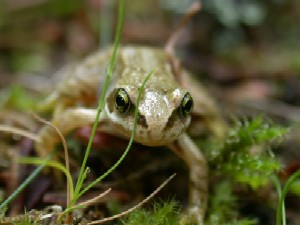
The frog photo is from Image After:
http://www.imageafter.com/index.php
We all benefit by being generous with our work. Permission is hereby granted for other educators to copy this WebQuest, update or otherwise modify it, and post it elsewhere provided that the original author's name is retained along with a link back to the original URL of this WebQuest. On the line after the original author's name, you may add Modified by (your name) on (date). If you do modify it, please let me know and provide the new URL.
Last updated 10-04. Based on a template from The WebQuest Page