Portfolio
2011
Web-quest


Podcast
My colleague Len Updike and I created this podcast about Rachel Carson, another lesson in the Social Injustice unit of study.
Expressive Arts Lesson
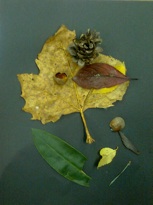
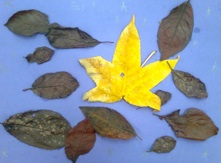
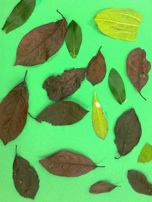
I created an Expressive Arts Lesson inspired by the work of Spanish architect Antoni Gaudí. While I used the opportunity to record myself teaching in order to reflect upon my pedagogy and teacher talk, I will protect the privacy of my students by only including pictures of their final products. You will find the lesson plan below.
Antoni Gaudí inspired art
Context: 1st Grade, previous art lessons with 6th grade buddies provides schema for this 60 minute activity, dry day in Fall.
rationale: The students have had practice with older students experiencing art. I feel this gives the students an advantage having had partaken in cooperative art lessons.
Objectives: SWBATDU (students will be able to demonstrate understanding) of the usage of natural resources in art by creating a piece of expressive art work with natural materials and orally communicating their understanding of that concept.
rationale: Experiencing hands-on with the creative process is essential in the cognitive development of children. The process rather than the product ought to be emphasized because varying artistic skill levels can affect self-concept.
Benchmarks: AR.03.CP.03 Create, present and/or perform a work of art that demonstrates an idea, mood or feeling.
Preparation –(2 mins) Each student will need a piece of construction paper (any color), white liquid glue, envelopes and natural materials (will be collected as part of the lesson).
(5mins)-Teacher will gather DRY leaves, bark-chips, rocks etc. before the lesson, just in case the materials the kids choose are too wet to glue down.
-Teacher will look for an appropriate place to take children on their material collecting journey.
-Photos of the work of Antoni Gaudí (such as la sagrada familia, parc guell and la casa mila)
rationale: It is important students find their own materials, as it is part of the creative process. The choice to use construction paper as a canvas for their artwork is a developmental decision. Many first graders do not yet have the fine motor skills to use glue on natural materials to create sculptures, but they are familiar with construction paper and pasting.
Note: To use this activity at an older grade level I would encourage the creation of 3-dimensional artwork.
Lesson Introduction/Set: (1 min)
Teacher will show pictures of Antoni Gaudí’s Parc Guell. Teacher will use guided questioning to highlight the use of natural materials in the design of the park.
rationale: Showing pictures of a Spanish architect’s work makes this an authentic assignment, relating it to the real world.
Sharing Objectives: (1min) Teacher will communicate to students how they will use nature today to make art of their own.
rationale: To communicate with students the reason behind the activity I have created for them.
Learning activities: (time for each)
The teacher will allow the students to collect construction paper, glue and envelopes (2 mins)
Students will be lead outside to a predetermined location, collect their natural materials in the envelope, then return to the classroom. (5-10 mins)
(As we are walking out) As we are walking, I want everyone to look around them at nature. Stop! Now, let’s all look around to decide which natural materials we want to use for our art project. I want you to look at what you want to use. Do you have it in your mind? Okay, when I say go I want everyone to walk to your leaves, twigs or whatever and pick them up. You will need at least three things. You have two minutes, Go! Okay, now let’s all be sure to hold on to our materials and carry them back inside to our desks and sit down.
Upon return to the classroom teacher will prompt students to begin to create their piece of art. Possible mention of glue etiquette (kisses).
Students will create their art. (10+ mins)
Students will be asked, “How do you feel creating your art?”
Differentiations:
Content: Provide instructions orally as well as visually.
Process: Ask students varying difficulties of questions to explain their understanding of the use of nature in art. This helps to ensure each student is working at a developmentally appropriate level.
Products: Encourage students to work in pairs if they feel they could use extra help in coming up with a creative idea, gluing etc.
Learning Environment: Allow students the option of working in different areas of the room.
Extension: For students who finish early the teacher will first suggest they elaborate on their pieces. (Extra materials will be available for this).
rationale: It is an important part of the creative process for students to choose their own materials. Going outside to collect materials ties their existing schema of outdoors to the concreteness of holding the materials in their hands and creating something. Reflecting upon their experiences orally encourages self-awareness.
Closure: (4 mins)
Students will be prompted to turn to a student next to them and explain their artwork and also listen to the other student’s explanation.
Students will then be asked to clean up.
rationale: To reemphasize the use of natural materials in art.
Student Evaluation: Teacher will monitor students’ progress throughout the creative process. Teacher will talk with students and ask them to tell me about your art.
rationale: Circulating will allow the teacher to assess the projects’ effectiveness as well as give individual guidance when needed. Encouraging the students to express their emotions verbally to the teacher or in front of the class will allow the assessment of students who have different speaking preferences/ levels of comfort.
Teacher Self-Reflection: (Before) Taking the children outside might prove to be a challenge. Also, using liquid glue as opposed to their glue sticks could prose a problem. (After) The lesson went really well. The kids did really well outside and found some interesting materials I didn’t know we had around the school. If I were to do this lesson again, I would be sure to address the possibility of critters hitching rides inside on leaves.
“A teacher is one who makes himself progressively unnecessary.”- Thomas Carruthers